
Roofing resources · 7 min read
What to Do After a Hailstorm Damages Your Roof in Southwest Missouri
The order you do things in after a hailstorm affects how the claim goes. Here is a practical sequence, and the tactics worth ignoring.
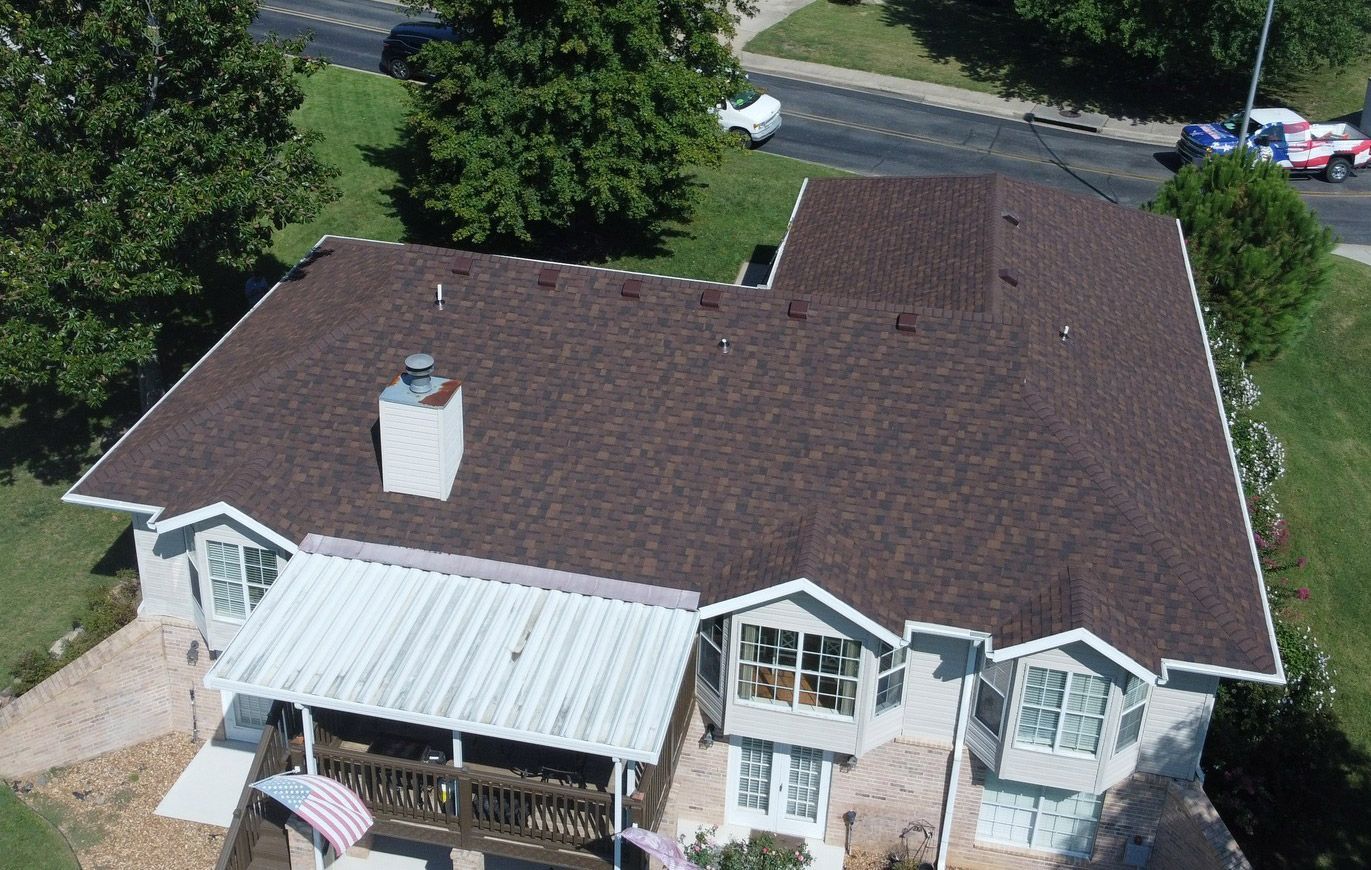
Hail season in Southwest Missouri runs heaviest from spring into early summer, and the storms are uneven. One subdivision takes pea-size hail and the street behind it takes golf balls. That is why a neighbor getting a new roof does not mean you need one, and why your roof having no obvious damage from the driveway does not mean it is fine.
1. Wait until it is safe, then look from the ground
Do not get on a wet roof. From the ground you can learn a lot. Check gutters and downspouts for dents, look for granule accumulation at the downspout outlets, and check soft metal surfaces: vent caps, flashing, the air conditioner fins, mailbox, grill lid. Soft metals take a visible dent from hail that is large enough to bruise shingles.
2. Photograph the collateral damage
Screens, fence tops, siding, deck boards, plants stripped of leaves, and anything on the property that shows impact. Note the date and time of the storm. Carriers work from storm dates, and an event that can be tied to a specific date is easier to process than damage discovered months later.
3. Get an inspection before you file
There is value in understanding the visible condition before calling your carrier. A free ARCC project/estimate inspection can document possible repair work. If you instead need a separately commissioned professional opinion and report about a disputed technical issue, ask about a paid insurance claim roof inspection. Coverage and deductible questions belong with your carrier or agent.
What actual hail damage looks like on shingles
- A circular area of missing granules with a bruised, soft feel when pressed
- A random strike pattern across a slope rather than a line or cluster
- Fresh exposed mat that is darker than the surrounding weathered surface
- Matching strikes on soft metals at the same elevation
- Splatter marks on painted or dusty surfaces that show the direction the storm came from
Things that are commonly mistaken for hail damage: blistering from manufacturing or heat, granule loss from normal aging, mechanical marks from someone walking the roof, and scuffs from tree limbs.
4. File with your own carrier
You file the claim, not the contractor. The carrier assigns an adjuster and sets an inspection appointment. Ask us to be there. Walking the roof with the adjuster and pointing to documented strikes on each slope is the single most useful thing a contractor does in this process.
5. Understand what you will be paid and when
Many policies pay actual cash value first, hold recoverable depreciation until the work is completed, and subtract your deductible, though the specifics are set by your policy. Confirm how your deductible and depreciation work with your carrier or agent. As a practical matter, a contractor offering to absorb or rebate your deductible is telling you something about how they operate.
Tactics worth ignoring
- Door knockers who need a signature today before they will inspect
- "Free roof" promises
- Out-of-state crews with a magnetic sign and no local address
- Anyone who tells you your claim is guaranteed to be approved
- Pressure to sign a contingency agreement before you know what the damage is
Storms bring companies into the area that will not be here next year when a workmanship issue shows up. Whoever you hire, check how long they have been in Southwest Missouri and whether you can find them in six months.
6. Get the work scoped correctly
The approved scope should match the damage: all affected slopes, ridge and hip, flashing, boots, and any collateral items like gutters and siding. If something is missed, a supplement with documentation is the normal path. See insurance restoration for how that works.